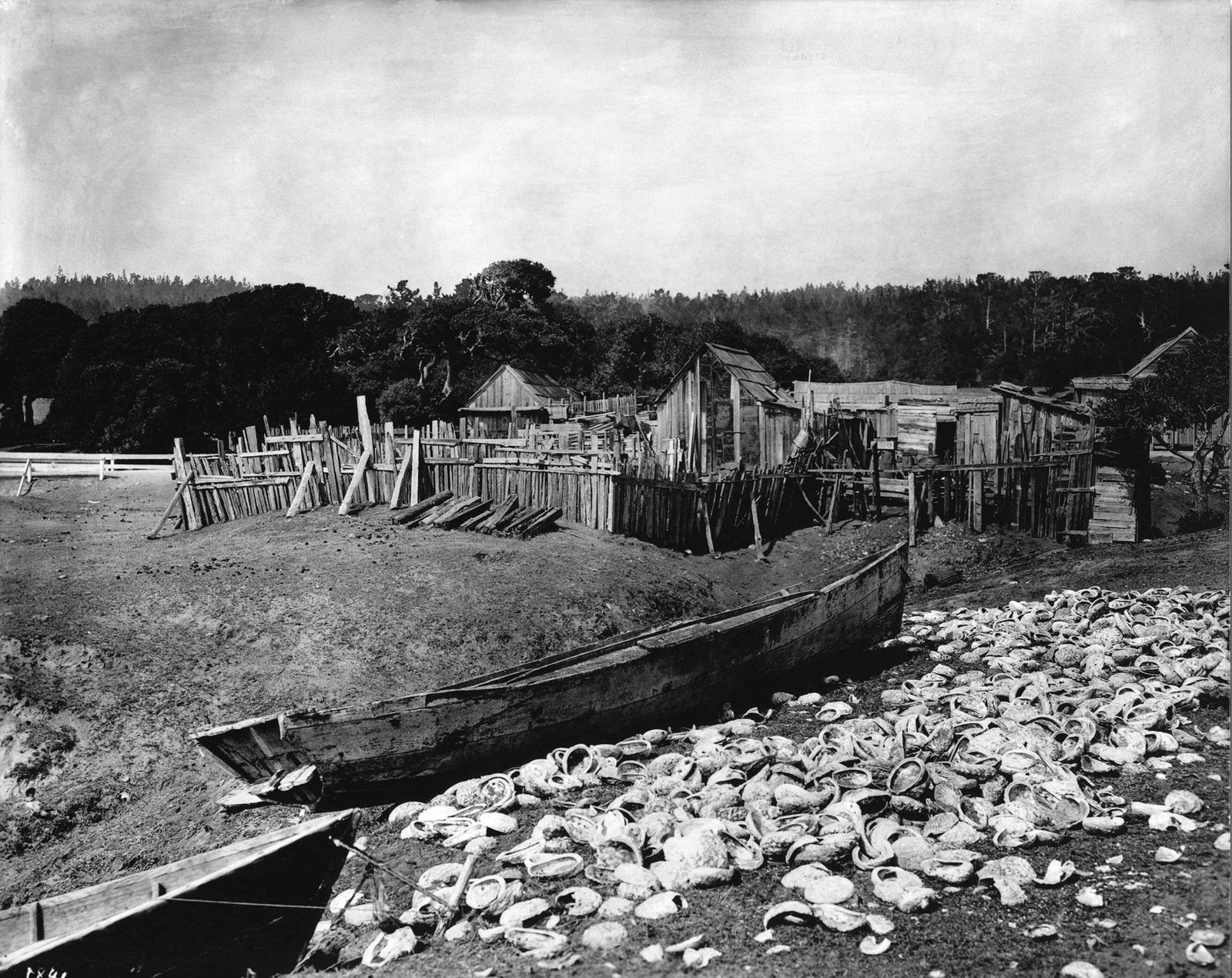
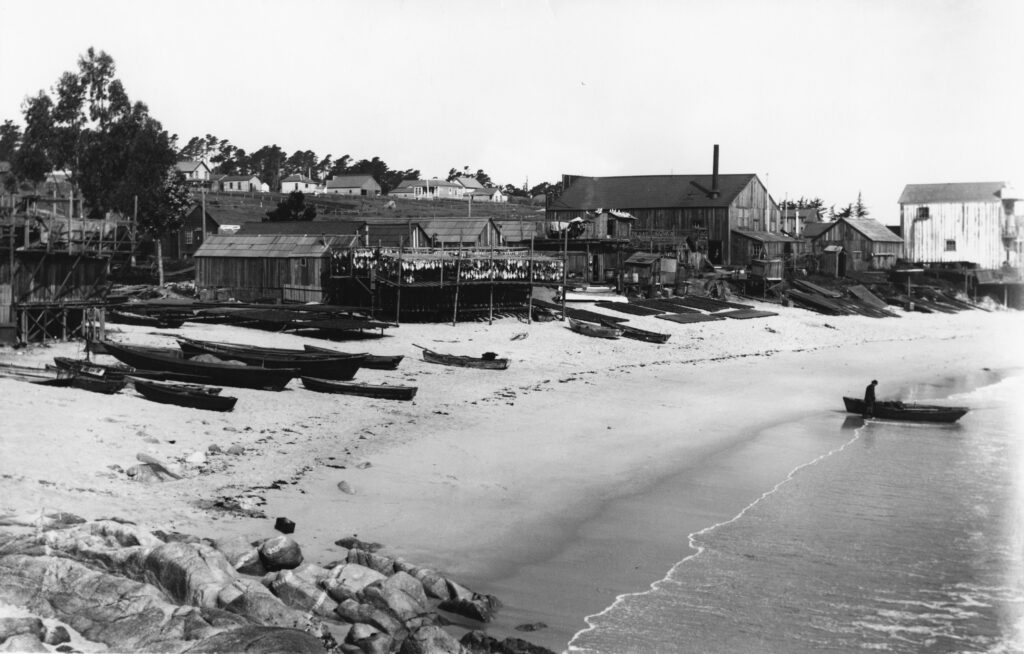
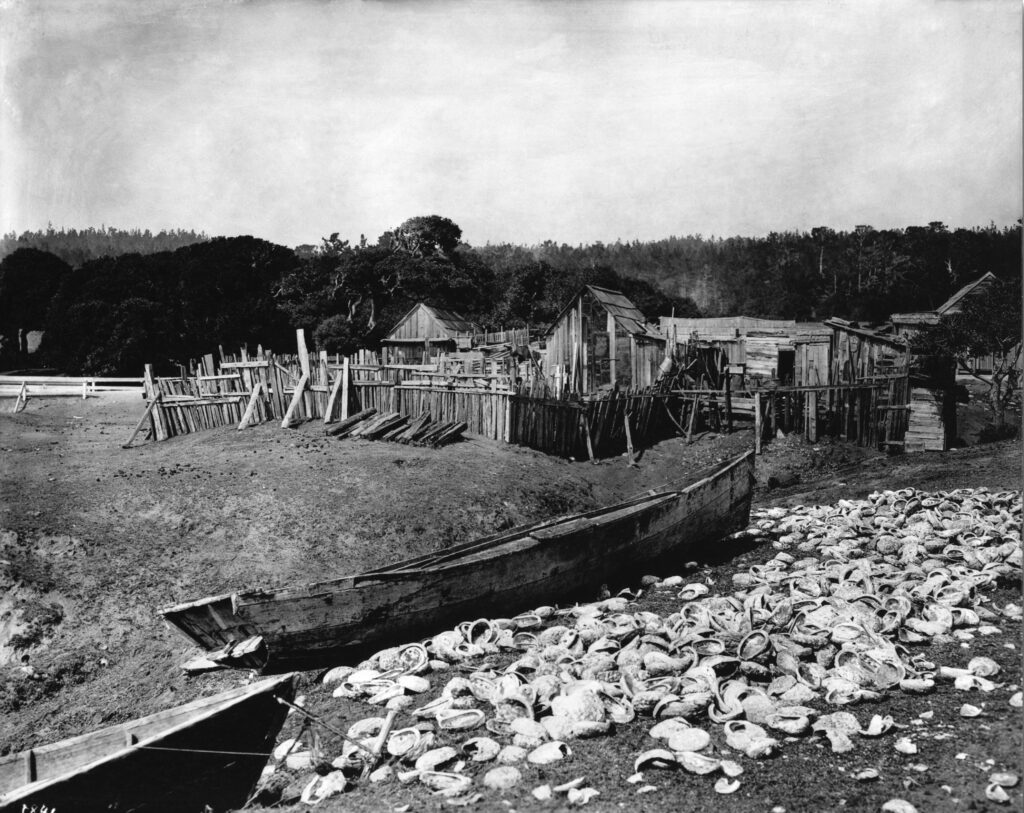
Fishermen coming from China in the early 1850s must have been pleasantly surprised to find Monterey's coastal waters brimming with abalone. While dried abalone is a delicacy in China, it was abundant in California. The Chinese gold miners who were having no luck finding gold in the mountains, moved to the shore to try their luck harvesting abalone. Dozens of Chinese came to Monterey each week setting up shacks along the shores of Point Lobos, Point Joe, and Point Sur. At first, only abalone meat had value, and the shells were stacked along the walls and on the roofs of the worker's cabins. But soon there was a market for abalone shell jewelry and furniture and the shells were exported by the thousands.
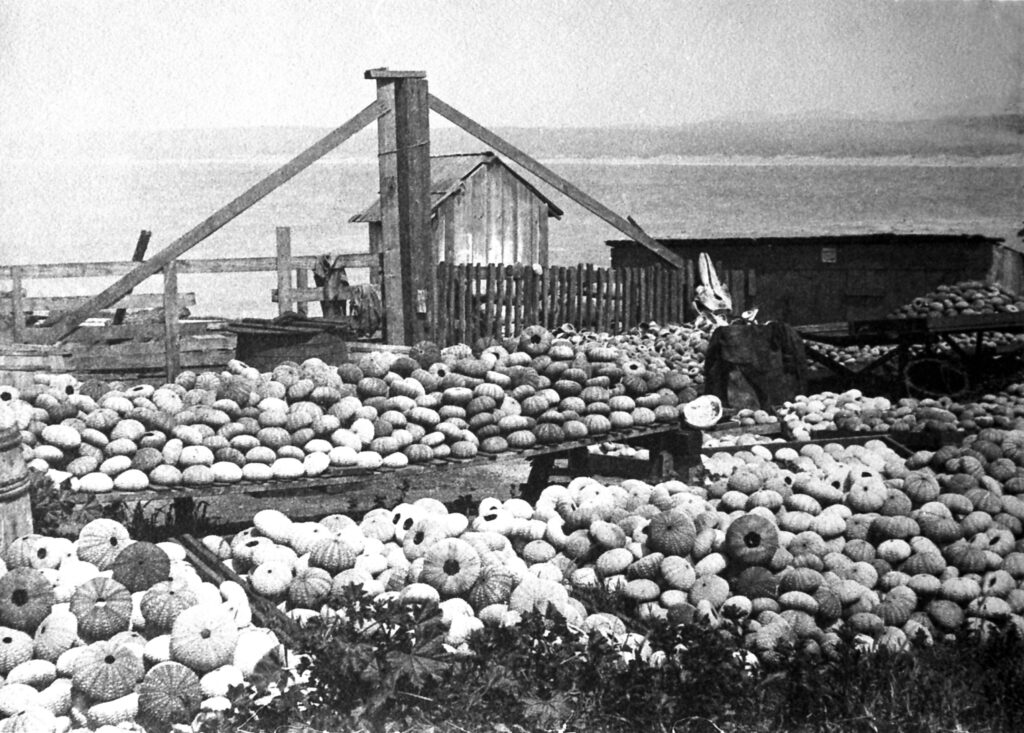
Point Alones Village, c. 1890. Sea urchin shells. Sea urchin and roe were eaten directly out of the shell with a spoon.
Fishing 漁業
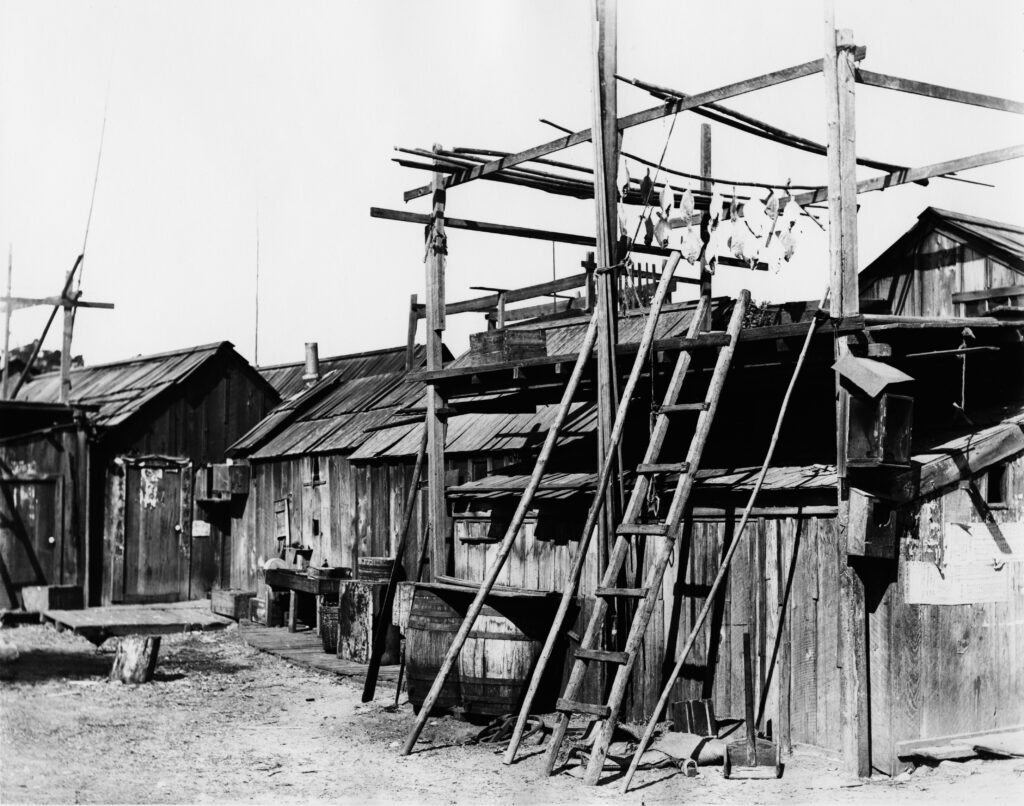
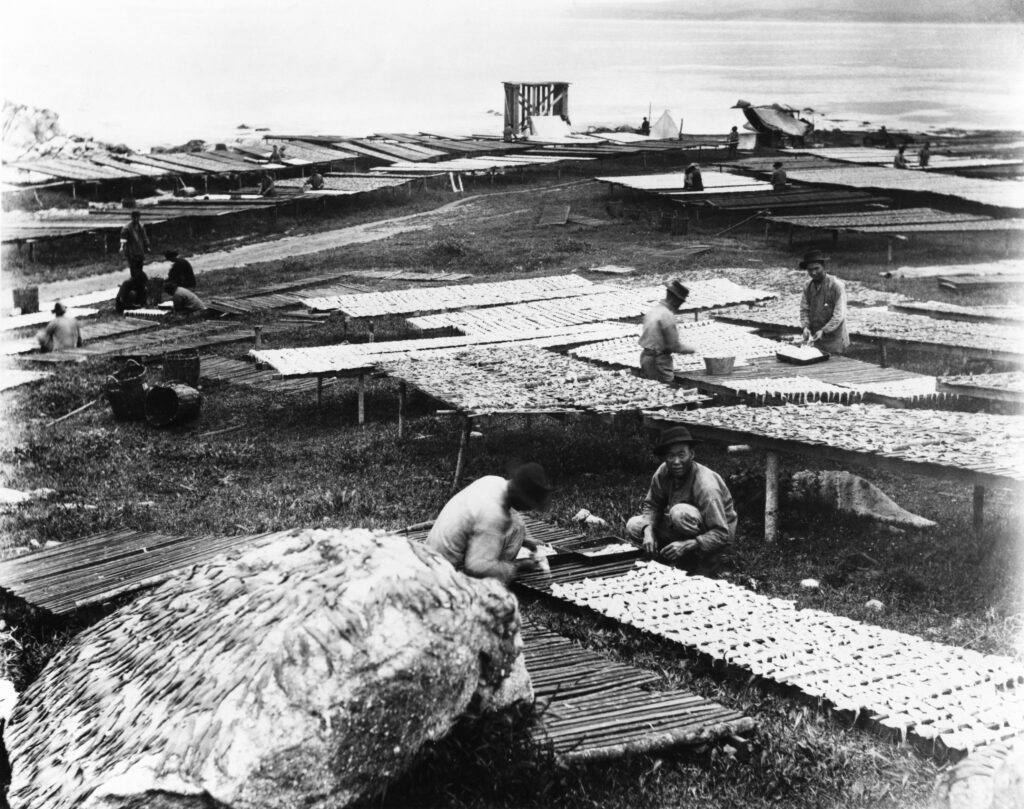
Since there was no way to export fresh fish from Monterey to other markets, the fish that was caught had to be preserved, and that meant drying it. Drying fish required skill and knowledge, both of which the Chinese workers had. They knew which fish had to be hung to dry and which could be spread out; which fish could be dried whole and which ones had to be cleaned, and which ones needed to be on racks and which ones could be put in the open air. This knowledge eventually gave them a monopoly in the market.
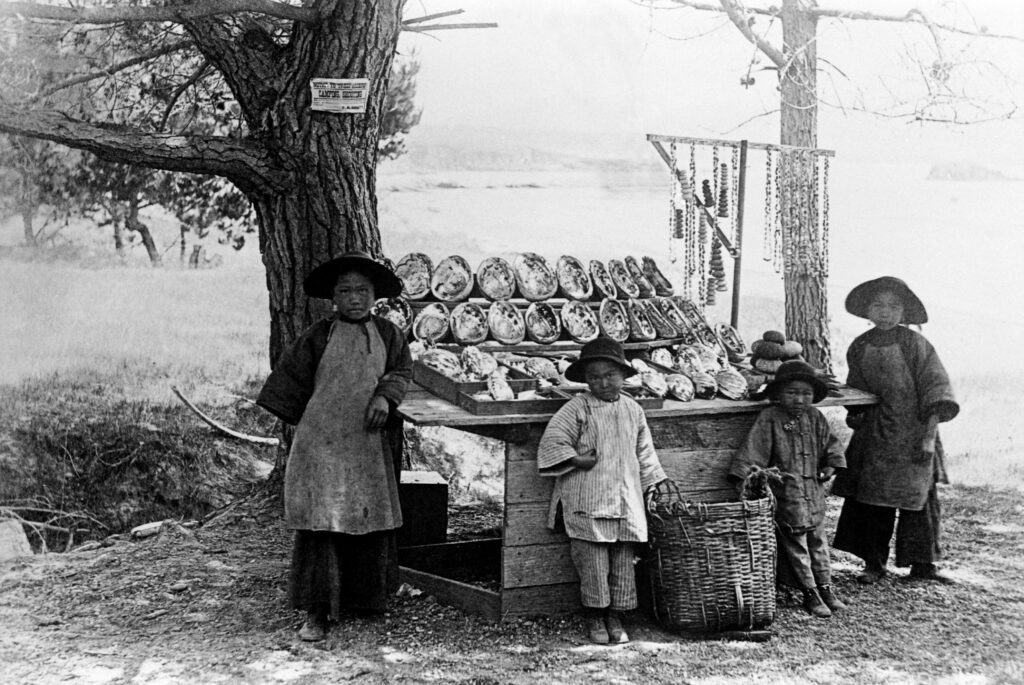
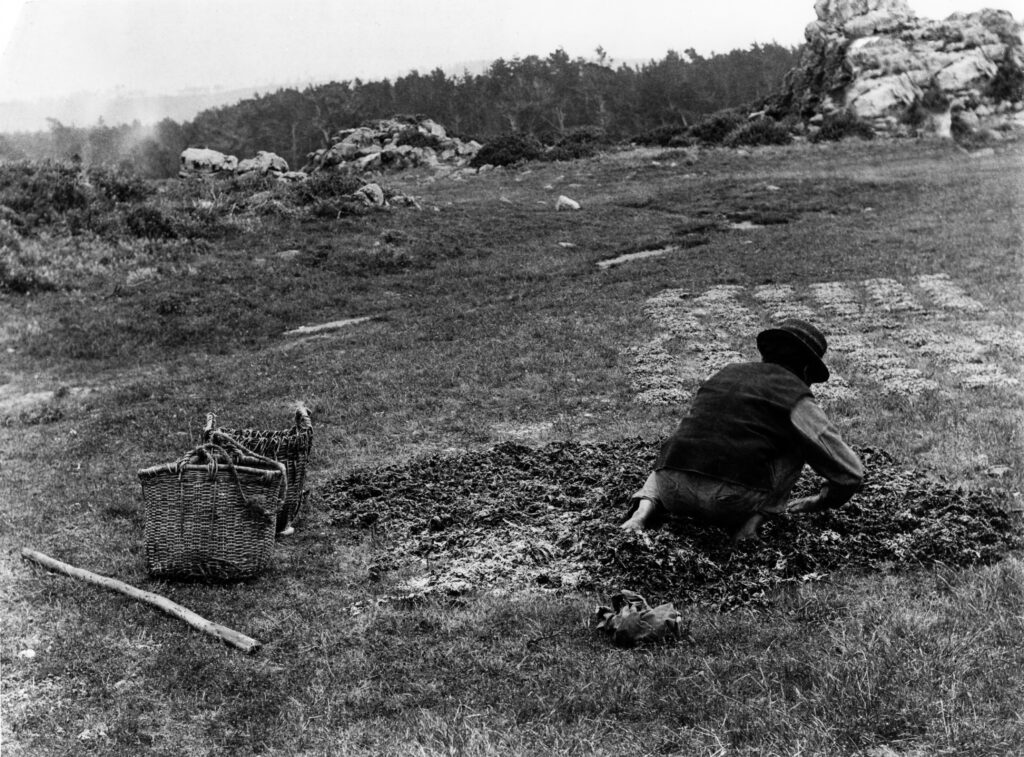
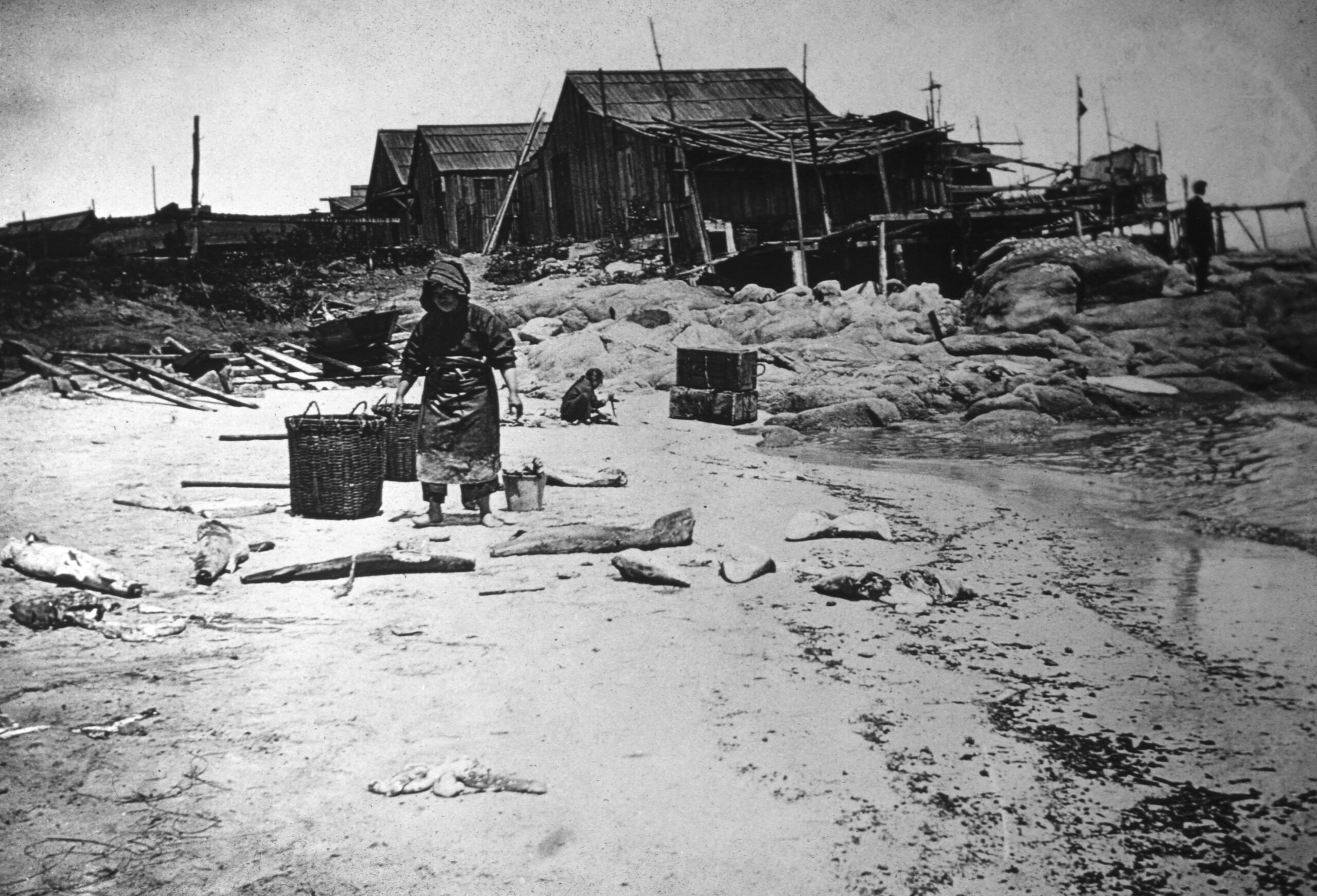
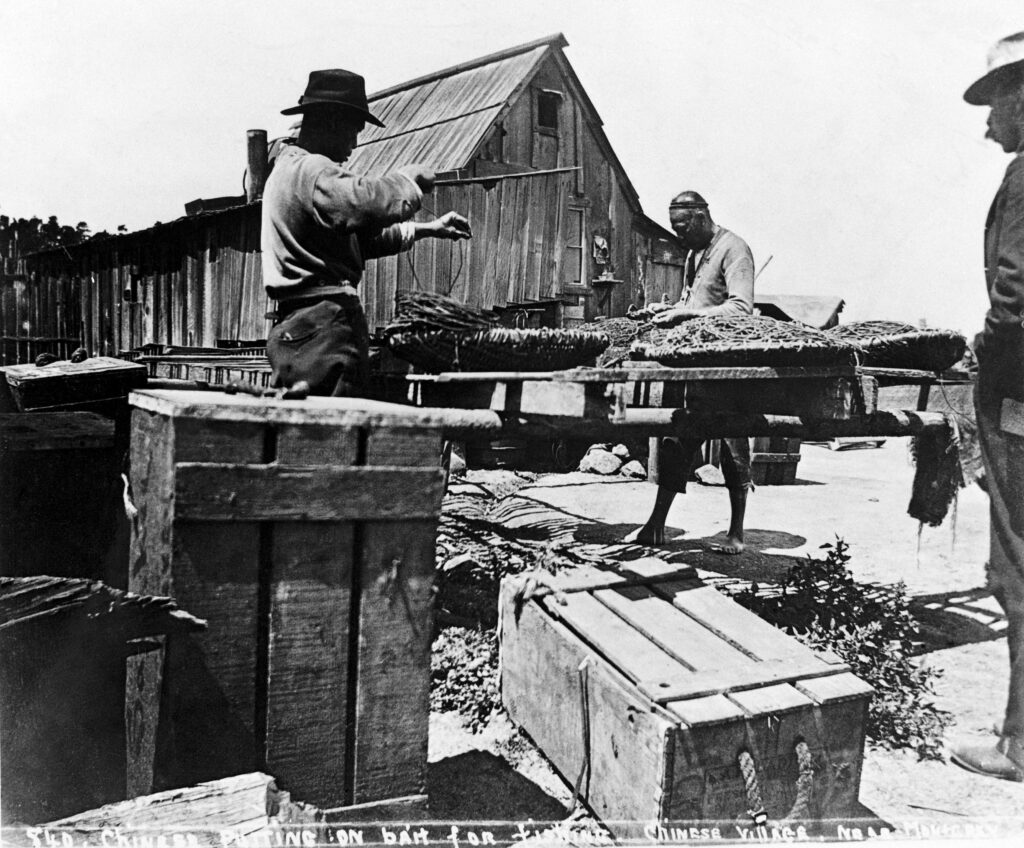
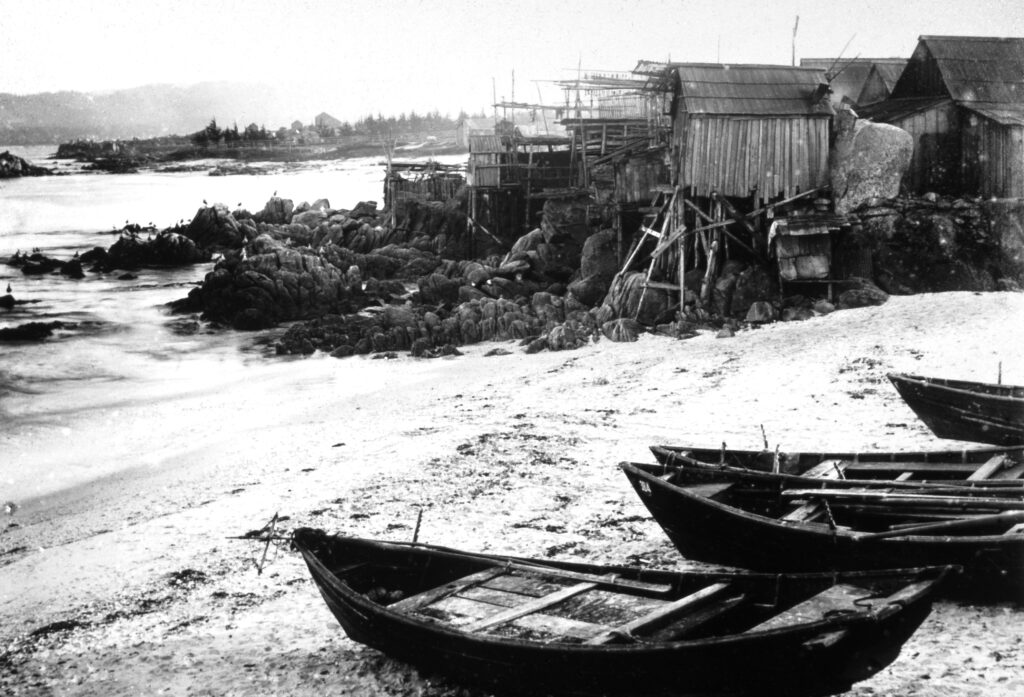
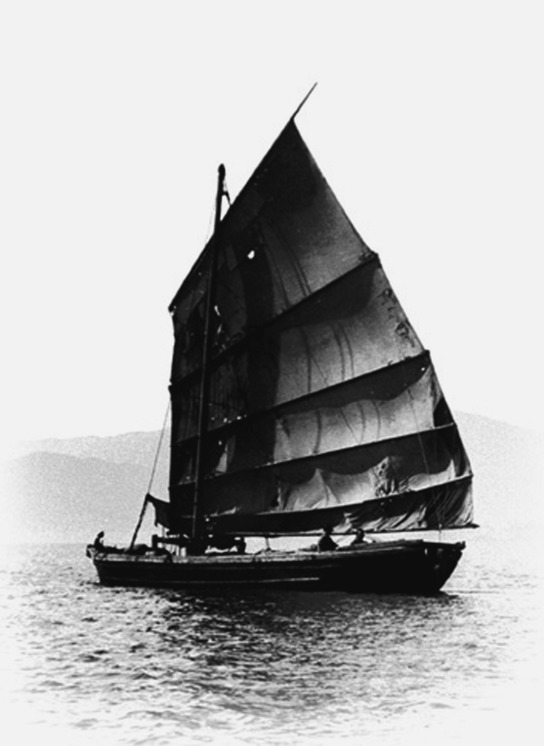
Jung family shell stand, Pescadero, c. 1890. Photo taken looking east; Pebble Beach and Stillwater Cove can be seen in the distance. This may have been the first souvenir stand in Monterey Peninsula history.Point Alones Fishing Village, c. 1890. Flounder hanging by the tails on drying rack at right.Point Alones Village, c. 1890. Squid drying. Note squid-draped rock in foreground. Squid were split, salted, and placed on the racks (called flakes) to dry.Near Lighthouse Point, c. 1898. Fisherman is spreading seaweed to dry. Dried seaweed was a highly-prized product of the Monterey Chinese fishing village.Point Alones Fishing Village, c. 1895. Woman is cutting and cleaning sharks on the beach. Note that fins, a delicacy, have already been removed.Point Alones Fishing Village, c. 1890. Squid boats. Note wire basket hanging from pole on boat in centre of photo. Fire to attract squid was burned in the basket.Point Alones Fishing Village, c. 1890. Two Chinese fishermen baiting trawl line hooks prior to going fishing. Boxes in foreground were used to ship fish by rail.Pescadero Fishing Village, c. 1900. Abalone shells in foreground, with older sampans. Seventeen-Mile Drive bridge on extreme left of photograph.Point Alones Fishing Village, c. 1890. Shows distinctive arched keel of Chinese sampan. All sampans were constructed by Chinese fishermen in the region.Junks similar in size to this one brought several Chinese families directly across the Pacific to California. This photograph is now used in the Pacific Migrations exhibit at New Brighton State Beach to help emphasise the fact that people, along with birds and whales, migrate across and around the Pacific Ocean.